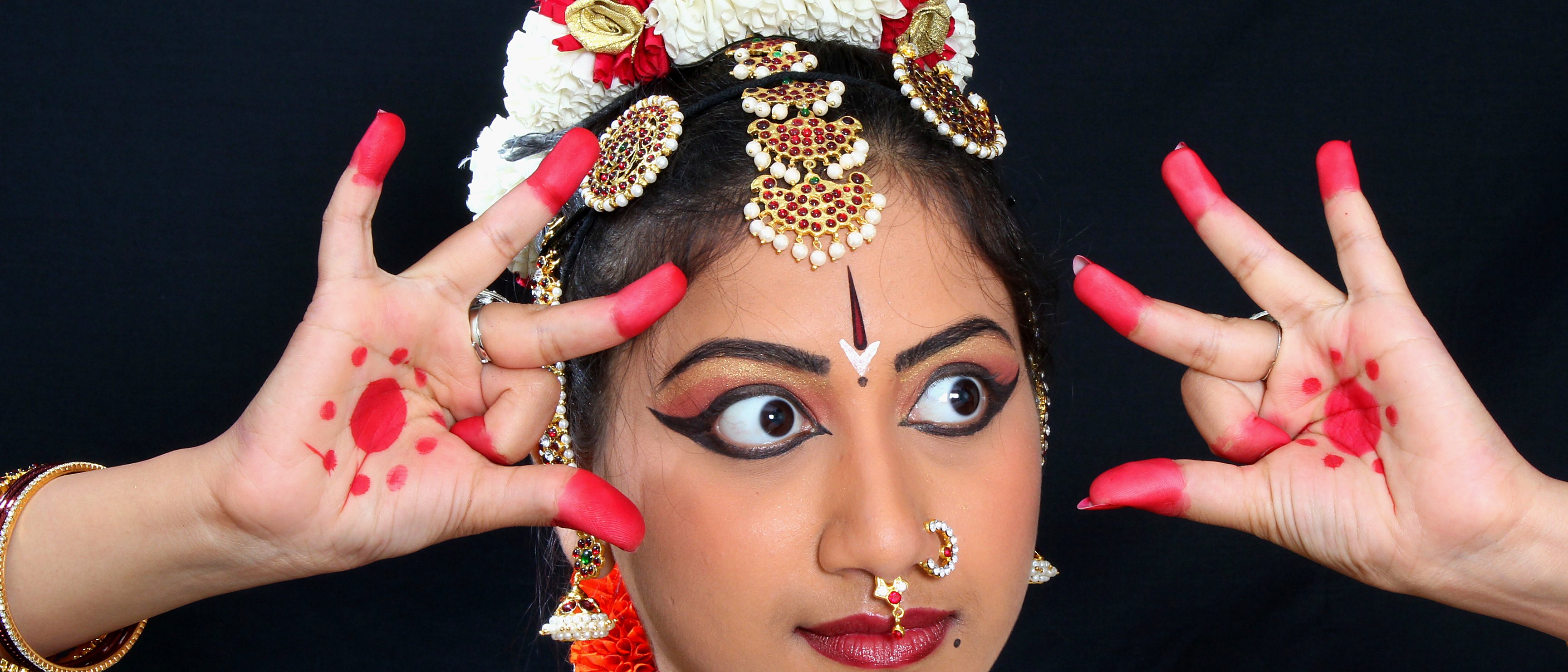
Nritta, Nritya, Natya: the three parts of Bharatanatyam
Ambika Ganeshprasad
Classical texts divide Bharatanatyam into three parts. The division still shapes how the art is taught today.
Nritta, pure dance
Movement for its own sake. Rhythm, line and pattern. No story and no character. The opening dances students learn, like Alarippu, are nritta. The dancer is a pure instrument.
Nritya, expression
The face and hands join in. The gestures begin to mean things. The eyes begin to lead. Nritya is where technique turns into communication.
Natya, drama
The dancer becomes the storyteller and every character in the story. Sometimes she switches between them in a single phrase. This is why one dancer can hold a stage for two hours.
Students meet the three parts in that order. The order is the syllabus. First the body. Then the face. Then the story.